Ice Dam Prevention: How to Protect Your Building from Winter Roof Damage
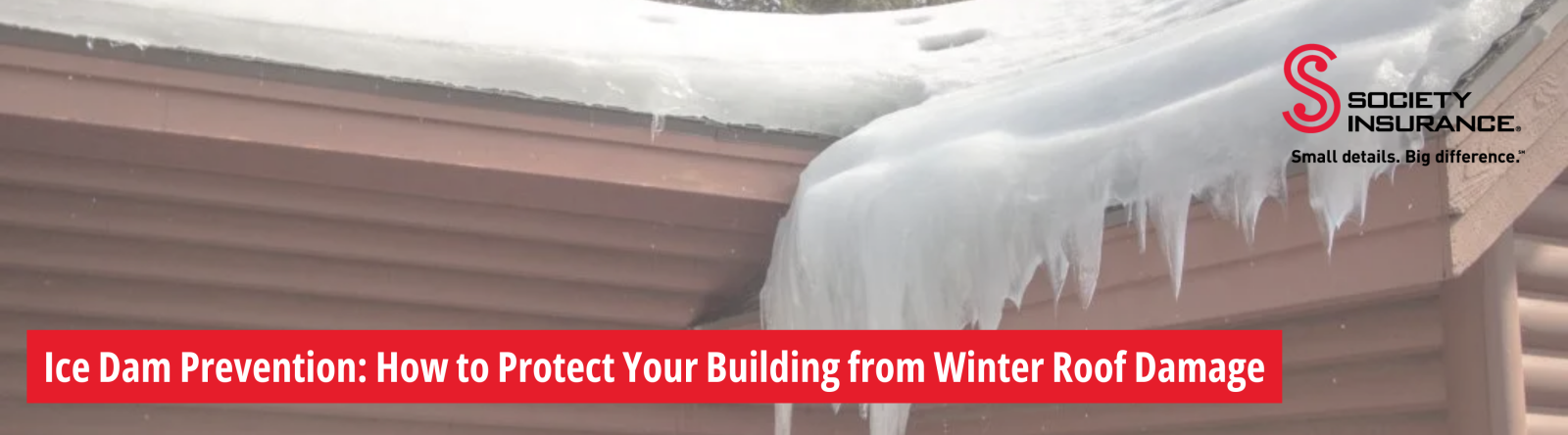
Ice dams are common in regions that experience cold, snowy winters. An ice dam is a symptom of an abnormally warm roof and can lead to costly water damage if left unaddressed.
They can occur after a heavy snowfall; and as snow melts on a warm roof, water runs downward and refreezes near the roof edge or gutters. Over time, this creates a ridge of ice that blocks proper drainage. As more snow melts, water backs up under shingles and can seep into the building.
If you notice large icicles hanging from the roofline, your building may already be at risk of ice dam damage.
How Ice Dams Cause Property Damage
Ice dams can lead to water intrusion under shingles, damaged insulation and ceilings, mold growth from hidden moisture, and costly roof and interior repairs.
For commercial and small business properties, this type of damage often results in insurance claims and business disruption, making prevention especially important.
Ice Dam Prevention Tips for Commercial Properties
1. Insulate and Vent Your Attic Properly
The most effective ice dam prevention starts before winter.
A properly insulated roof is the best way to reduce the chance of an ice dam. Adequate insulation in your attic space will help minimize heat loss which can lead to snow melting on your roof. You will also want to ensure proper roof ventilation in your roof ridges and soffit vents to help maintain consistent roof temperatures.
2. Keep Gutters and Downspouts Clear
Blocked gutters prevent water from draining properly. When water backs up and freezes, it increases the likelihood of ice dam formation.
Before winter arrives, clean gutters and downspouts, remove leaves and debris, and confirm downspouts direct water away from the building.
3. Remove Snow Safely After Heavy Storms
After significant snowfall, snow removal can reduce roof load and melting.
- Use a roof rake or broom when possible
- Avoid damaging shingles
- Consider hiring a professional snow removal contractor to reduce injury risk
4. Install Preventive Roof Systems
For buildings prone to ice dams, preventive systems may be worth the investment:
- Heat cables along roof edges to keep drainage paths open
- Ice and water barriers installed under shingles during roof replacement to prevent water intrusion
What to Do If an Ice Dam Forms
In the event of an ice dam, contact a professional to help properly mitigate the risk. Salt or steam can be used to melt the ice dam and reduce damage. You do not want to shovel or chisel the ice dam away as this can cause additional damage to your roof covering.
Final Thoughts on Ice Dam Prevention
The best way to prevent ice dams is proactive maintenance:
- Proper attic insulation and ventilation
- Clean gutters and downspouts
- A snow-removal plan for heavy winter storms
Taking these steps helps protect your building, reduce winter property damage, and lower the risk of insurance claims.
For more winter risk management and property protection guidance, visit Society Insurance.
Society Insurance was recently named in the Business Insurance Best Places to Work in Insurance 2023 program, which recognizes employers for establishing exceptional workplaces where employees can thrive, enjoy their work and help their companies grow. The company is known throughout the industry as a leader in providing superior restaurant and bar insurance, custom-tailored to fit each operation's unique needs. To learn more, visit societyinsurance.com/georgia.
This information is provided as a convenience for informational purposes only and does not constitute legal or professional advice. It is provided to assist you in recognizing potential unsafe work problems or conditions and not to establish compliance with any law, rule or regulation.