Technology Doesn’t Replace Staff — It Replaces Blind Spots
Date postedAugust 14, 2026
Technology Doesn’t Replace Staff — It Replaces Blind Spots
The most dangerous sentence in restaurant operations is:
“We’ve always done it this way.”
Especially when it comes to technology.
Connected monitoring is often misunderstood as:
-
A labor replacement strategy
-
A gadget purchase
-
An unnecessary tech layer
That thinking is flawed.
The real function of connected monitoring is not labor reduction.
It is friction reduction.
Why This Matters Now
Margins are compressed.
Labor is inconsistent.
Turnover is high.
Managers are stretched thin.
Labor is inconsistent.
Turnover is high.
Managers are stretched thin.
In this environment, operational friction compounds.
Blind spots multiply.
Manual oversight becomes unreliable.
The question is no longer whether technology is necessary.
The question is whether your oversight model is scalable.
Myth #1: “Technology Replaces People”
Reality: It reduces low-value manual tasks.
Automated temperature logging reduces repetitive checks.
Alerts replace random inspections.
Exception-based management replaces constant oversight.
Alerts replace random inspections.
Exception-based management replaces constant oversight.
Your team focuses on guests — not clipboards.
Myth #2: “If It Looks Fine, It Is Fine”
The “Looks Fine” fallacy is costly.
Display temps are not product temps.
Doors left open for 12 minutes during delivery matter.
Paper logs miss subtle drift patterns.
Doors left open for 12 minutes during delivery matter.
Paper logs miss subtle drift patterns.
Visibility must be continuous, not visual.
Myth #3: “Alerts Are Enough”
Alerts without escalation are noise.
Effective monitoring includes:
-
Tiered escalation paths
-
Role assignment
-
Clear corrective documentation
-
Weekly exception reviews
Otherwise, alerts become ignored notifications.
Myth #4: “Manual Checks Are Good Enough”
Manual systems:
-
Depend on memory
-
Depend on staffing consistency
-
Fail under turnover
Automated systems:
-
Log continuously
-
Export audit-ready records
-
Trigger documented corrective action
This is not about sophistication.
It is about reliability.
What Actually Drives Efficiency
Efficiency comes from:
1. Exception-Based Management
You manage deviations — not normal conditions.
You manage deviations — not normal conditions.
2. Automated Documentation
Audit logs generated automatically reduce scramble time.
Audit logs generated automatically reduce scramble time.
3. Escalation Structure
Clear roles eliminate ambiguity.
Clear roles eliminate ambiguity.
4. Weekly Pattern Recognition
Exception summaries reveal repeat unit issues or staff behaviors.
Efficiency is structured oversight.
Exception summaries reveal repeat unit issues or staff behaviors.
Efficiency is structured oversight.
Efficiency Audit Checklist
Ask yourself:
-
Do alerts escalate if unacknowledged?
-
Are corrective actions documented digitally?
-
Can you export audit logs instantly?
-
Do you review weekly exception summaries?
-
Does monitoring continue during power outages?
-
Is escalation role-based or email-based?
If the answer to any is “no,” efficiency is constrained.
Strategic Close
Technology does not replace staff.
It replaces:
-
Guesswork
-
Blind spots
-
Scramble audits
-
Overnight surprises
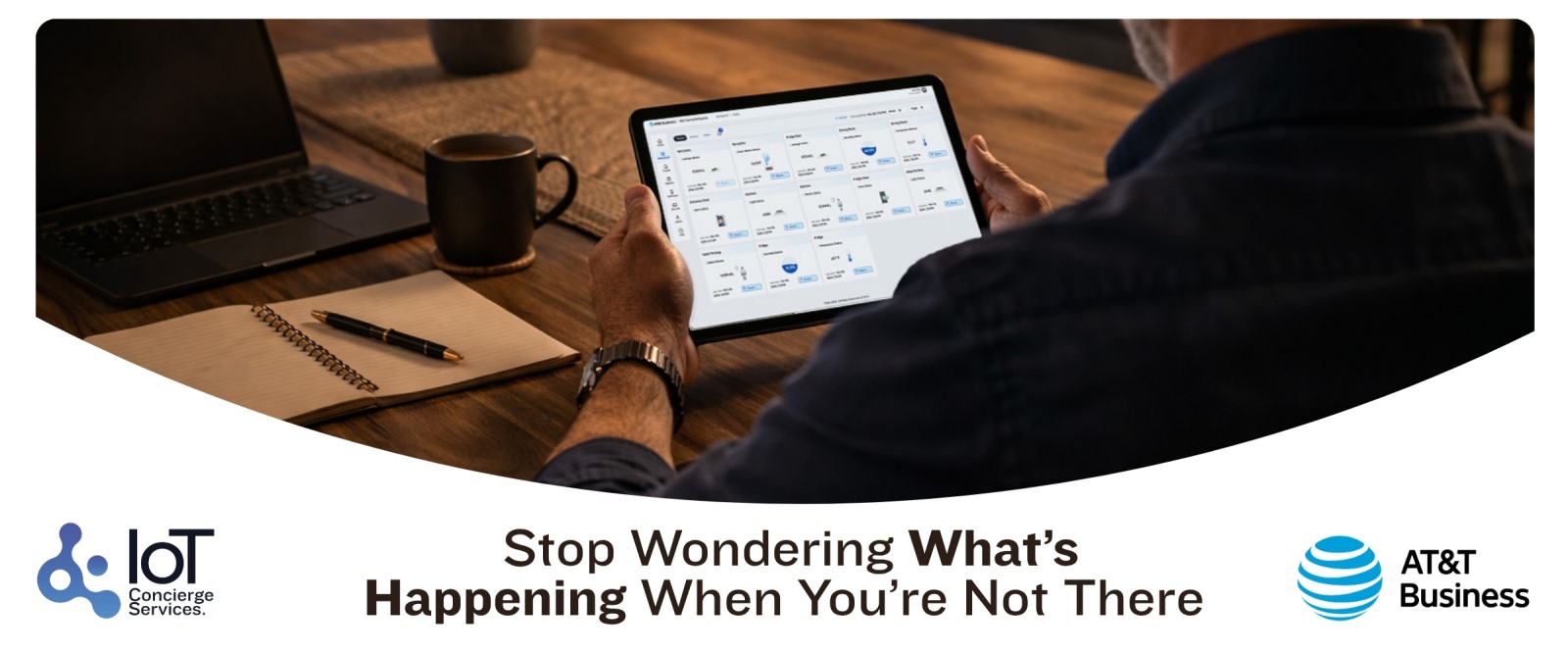
AT&T Connected Spaces provides connected monitoring infrastructure. IoT Concierge Services supports education and structured evaluation within that program.
If you want to assess your exposure:
Better visibility reduces friction.
Reduced friction improves margin.
Reduced friction improves margin.