
The Difference Between Class K Fire Extinguishers vs. ABC Fire Extinguishers
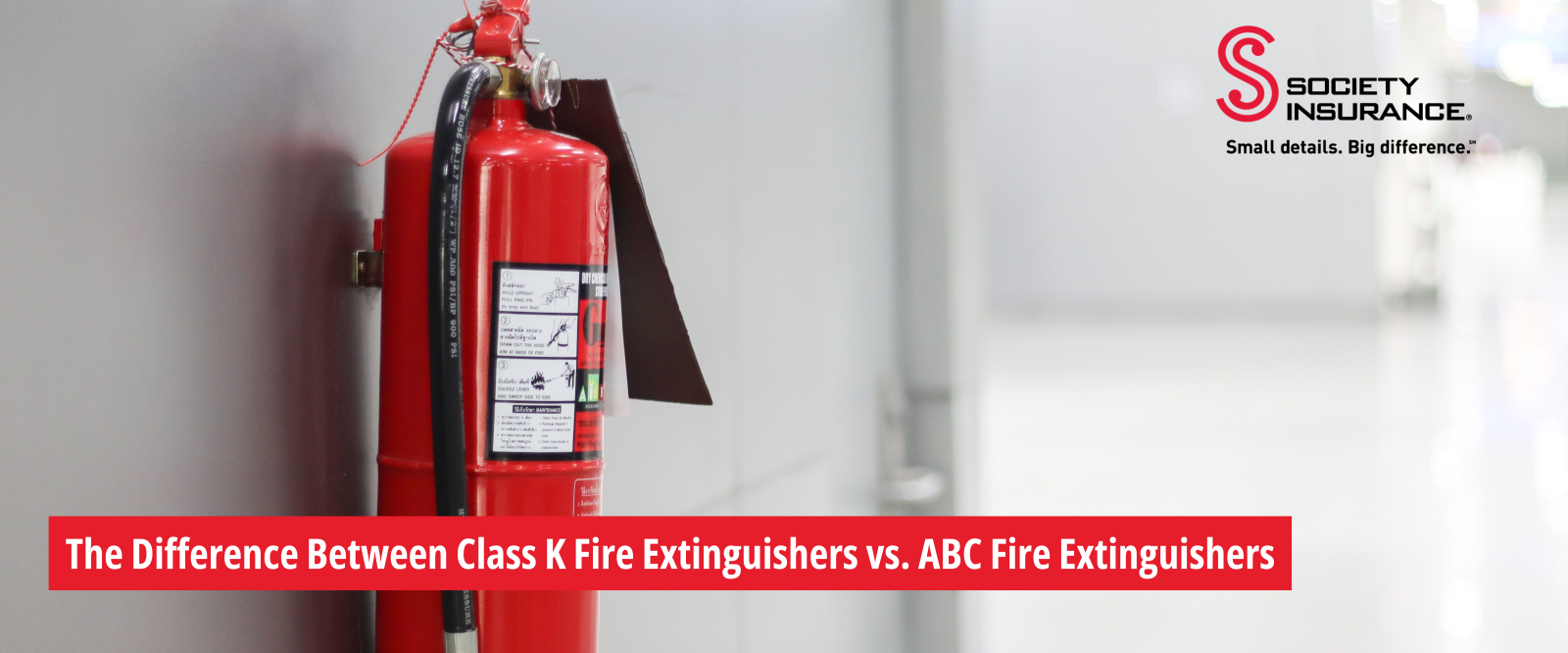
There is a grease fire that started on your commercial cooking line. You look back to find two fire extinguishers sitting on the wall. One is a silver fire extinguisher and the other is a common red fire extinguisher. You inspect them a little closer and notice that the silver one is marked as a class K fire extinguisher and the red one is marked as an ABC fire extinguisher. Which fire extinguisher should you use? Before we answer that question, let’s get into what each of the letters mean.
What Do the Letters on Fire Extinguishers Stand For?
The letters on fire extinguishers stand for the class of fire it is able to help extinguish.
The commonly found red fire extinguisher has three letters – A, B, and C.
A class A extinguisher can put out ordinary combustible fires such as wood and paper.
Class B extinguishers are for use on flammable liquids fires such as petroleum, gasoline, oil, paint, propane and butane fires.
Class C extinguishers are suitable for use only on electrically energized fires.
An ABC fire extinguisher is a multipurpose fire extinguisher. It can extinguish multiple different types of fires with a multipurpose dry chemical that smothers the burning materials by separating the fuel from oxygen in the air.
Silver class K fire extinguishers are meant exclusively to handle kitchen grease fires. They utilize a foam-forming agent that prevents persistent kitchen fires from reigniting.
Note: It is important to note that the red ABC fire extinguisher uses a dry chemical agent, which is the opposite of silver class K fire extinguishers.
How Class K and ABC Extinguishers Work Differently
Understanding the fundamental differences between these extinguishing agents is crucial for commercial kitchen safety:
Class K Wet Chemical Agent:
- Creates a thick foam blanket that covers and cools the burning oil
- Forms a saponification barrier that prevents oxygen from reaching the fuel
- The alkaline solution reacts with cooking oils to create a soapy foam layer
- Provides long-lasting suppression that prevents re-ignition
ABC Dry Chemical Powder:
Can scatter burning grease when applied, potentially spreading the fire
Releases monoammonium phosphate powder that interrupts the chemical reaction
Works by coating burning materials and creating a barrier between fuel and oxygen
Effective on multiple fire types but not specifically designed for high-temperature cooking oils
Class K Fire Extinguishers for Commercial Kitchen Fires
Even though the ABC fire extinguisher may be able to temporarily put out the cooking fire, the class K fire extinguisher with its wet chemical agent will help make sure it does not reignite. Unlike the common class ABC multipurpose fire extinguisher, NFPA 96 strictly requires Class K portable fire extinguishers in commercial kitchens where there is potential for fires involving combustible cooking media such as vegetable or animal oils and fats. They must be placed within 30 feet of the cooking line. Also, all fire extinguishers must be properly mounted.
Why ABC Extinguishers Can Be Dangerous on Grease Fires
While ABC extinguishers are versatile, using them on commercial cooking fires can create additional hazards:
- Fire Spread Risk: The forceful discharge of dry chemical powder can scatter burning grease, spreading the fire to other areas
- Insufficient Cooling: ABC agents don’t provide the cooling effect needed for high-temperature cooking oils, leading to rapid re-ignition
- Contamination Issues: Dry chemical residue can contaminate food preparation surfaces and equipment
- False Security: The fire may appear extinguished but can quickly reignite once the powder settles
Additional Safety Codes and Placement Requirements
Beyond the 30-foot rule, we recommend following these safety guidelines:
- NFPA 10 Standards: Class K extinguishers must be installed according to National Fire Protection Association guidelines
- Height Requirements: Mount extinguishers so the top is no more than 5 feet from the floor
- Accessibility: Ensure clear, unobstructed access to extinguishers at all times
- Visibility: Install proper signage and lighting so extinguishers are easily identifiable
- Multiple Units: Large commercial kitchens may require multiple Class K extinguishers for adequate coverage
So, back to answering the original question. A class K fire extinguisher should be used to put out a cooking fire, especially in commercial kitchens.
Proper Fire Extinguisher Usage: The PASS Method
Whether using a Class K or ABC extinguisher, we recommend following the PASS method for safe and effective operation:
- Pull the safety pin from the handle
- Aim the nozzle at the base of the fire, not the flames
- Squeeze the handle to discharge the extinguishing agent
- Sweep from side to side at the base of the fire until it’s completely extinguished
Important for Class K extinguishers: After using the PASS method, continue to apply the wet chemical agent to create a complete foam blanket over the entire surface of the cooking oil.
Maintenance and Inspection Requirements
Regular maintenance is essential for both types of extinguishers, though requirements differ:
Class K Extinguisher Maintenance
- Monthly Visual Inspections: Check pressure gauge, safety seals, and overall condition
- Annual Professional Service: Required by NFPA standards for wet chemical units
- 6-Year Internal Examination: Comprehensive inspection of internal components
- 12-Year Hydrostatic Testing: Pressure testing to ensure cylinder integrity
ABC Extinguisher Maintenance
- Monthly Visual Inspections: Similar to Class K units
- Annual Professional Service: Required for all commercial extinguishers
- 6-Year Maintenance: Internal examination and recharging if needed
- 12-Year Hydrostatic Testing: Same pressure testing requirements
Key Difference: Class K extinguishers require more frequent professional attention due to their wet chemical agents, which can be more corrosive to internal components than dry chemical agents.
Download this free whitepaper to learn more about fire safety: “Fire Protection & Maintenance Essentials for Commercial Kitchens.” Contact your local Society agent to discuss insurance options for your business.
Society Insurance was recently named in the Business Insurance Best Places to Work in Insurance 2023 program, which recognizes employers for establishing exceptional workplaces where employees can thrive, enjoy their work and help their companies grow. The company is known throughout the industry as a leader in providing superior restaurant and bar insurance, custom-tailored to fit each operation's unique needs. To learn more, visit societyinsurance.com/georgia.
This information is provided as a convenience for informational purposes only and does not constitute legal or professional advice. It is provided to assist you in recognizing potential unsafe work problems or conditions and not to establish compliance with any law, rule or regulation.